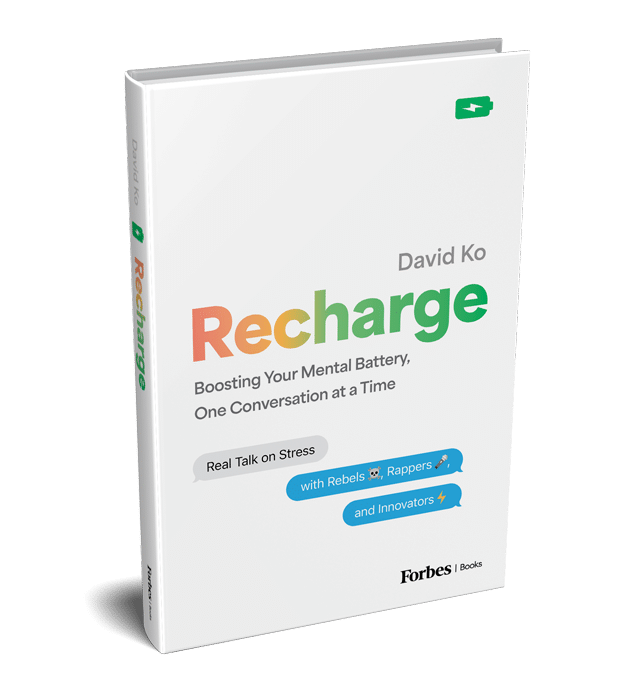
What is Recharge about?
These conversations cover topics like coping with anxiety, enhancing the mind-body connection, and handling stress management in personal and professional settings. While Recharge offers tools for self-care and meaningful conversation, it’s designed to complement—not replace—professional mental health support.
Who is David Ko?
David Ko is the CEO of Calm, a leading company in mental health and mindfulness. With a background in technology and healthcare, including previous roles at Rally Health and on Wall Street, David brings a unique perspective to his work at Calm. His journey with mental health began as a teenager experiencing panic attacks, and he’s passionate about supporting others on their mental health journey. This personal mission inspired him to write Recharge, where he shares insights from his experiences and offers strategies to help individuals “take care of their brain”—or, as he puts it, the “battery that powers our lives.”
What is the ‘battery’ metaphor?
Why did David Ko write Recharge?
David’s inspiration for writing Recharge stemmed from having panic attacks at a young age and not knowing what they were or how to deal with them. He wanted to talk about it in hopes to make it easier to talk about mental health, especially in the workplace. Recharge is based on David’s own experiences, as well as insights from people across industries, all of whom share a commitment to improving emotional resilience and mental wellness.
What are some of the key topics discussed in the book?
In Recharge, David covers essential topics in mental health, such as the mind-body connection, stress management techniques, sleep hygiene, and workplace wellness. He shares strategies for reducing stress and anxiety, maintaining work-life balance, and managing challenging experiences, including loss and addiction. The book includes advice for building emotional well-being, mindfulness practices, and even ways to approach mental health conversations at home and at work.
How can I apply the concepts in Recharge to my own life?
You can use Recharge to improve various aspects of life. David explains the science of stress and its effects on both body and mind, encouraging readers to monitor their mental “battery” and take regular breaks to recharge. The book suggests self-care strategies like improving sleep hygiene, practicing mindfulness, and incorporating gratitude and movement into daily routines. David also emphasizes the importance of keeping recharges simple, easy and accessible. Small “minibreaks” throughout the day to manage stress and stay energized can be as easy as calling a friend or going outside to feel the sun on your face.
Does Recharge offer specific advice for different mental health conditions?
Recharge focuses on general stress management and anxiety relief but does not offer clinical advice for complex mental health conditions, like bipolar disorder or PTSD. Instead, David provides techniques to manage common challenges like burnout and anxiety, and he encourages readers dealing with specific conditions to seek out professional resources for specialized support. The book includes an appendix with additional mental health resources and organizations that can offer help for more complex needs.
What are some ways to improve mental health in the workplace?
How can I have difficult conversations about mental health with others?
Recharge includes tips for approaching mental health discussions with empathy and honesty. David recommends starting with just asking “what’s your battery level?” Open-ended questions and listening help create a safe space for people to share. . He emphasizes the importance of vulnerability and active listening, suggesting that sharing your own experiences can make these conversations more approachable. For meaningful dialogues, David encourages readers to let go of judgments and to focus on supporting one another in a compassionate way.